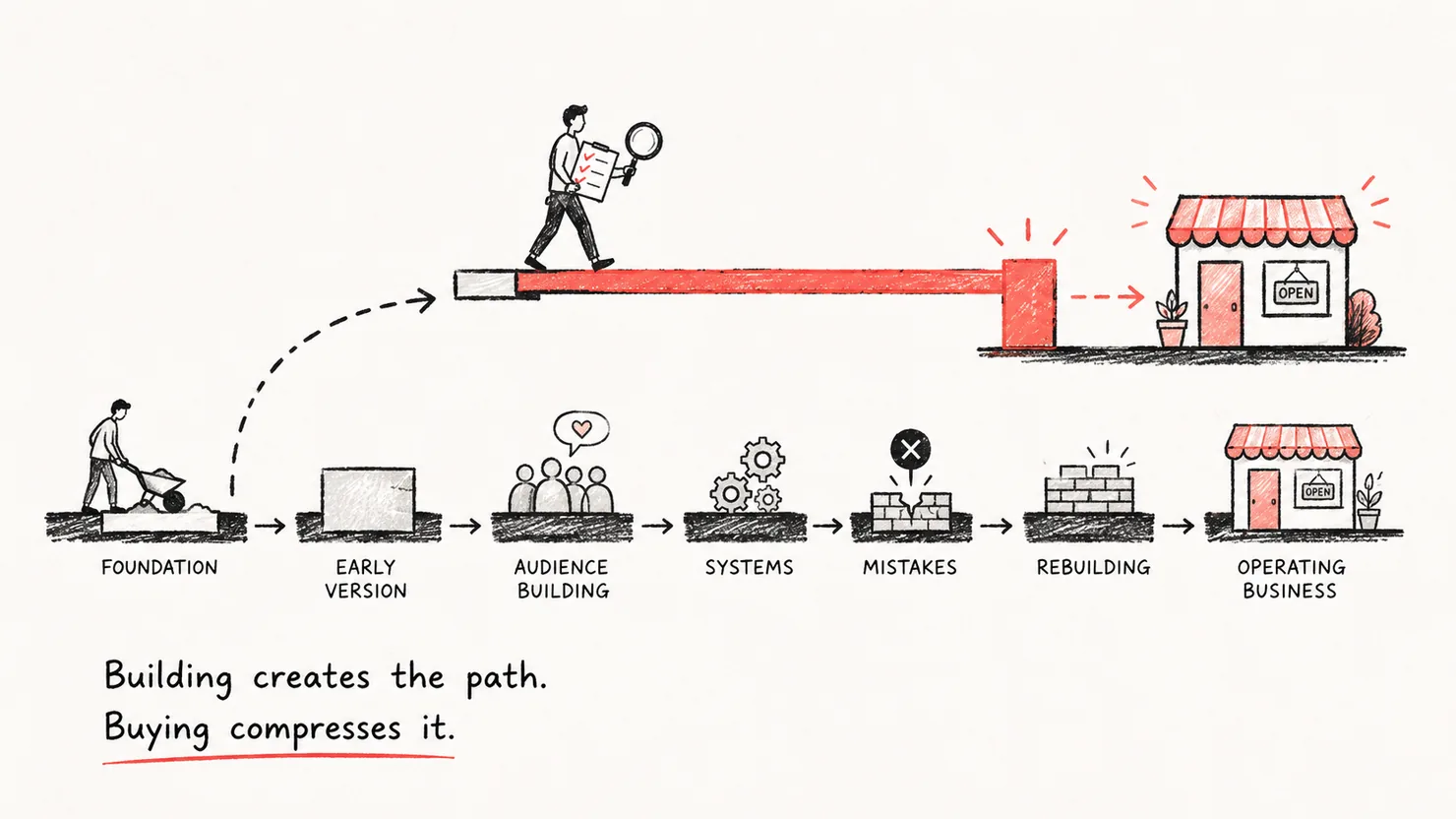
In 2019 I acquired a newsletter with a website – a small community around digital projects with no revenue, no documentation, and a lot of potential. It eventually became Indiemaker. I'd built things from scratch before. I thought I understood how that process worked. Acquiring a raw asset and turning it into something taught me things that building from zero never had.
When you build from scratch, you write the history. When you acquire, you inherit someone else's – and then you decide what to do with it.
I should say upfront: I was not a textbook buyer. The handover was a few weeks of emails back and forth. No formal documentation, no clean data room. I didn't stress about traffic the way a conventional checklist would suggest – because I owned a software studio, and most of the problems I might inherit, I could fix. That safety net shaped how I approached it, and it's worth being honest about, because not every buyer has it. What I was really buying was time and a starting point. That's a different calculation than acquiring a profitable business.
Building gives you the luxury of starting clean. You design the systems, set the culture, choose the customers. Buying forces you to understand someone else's decisions – why they built it this way, who the customers actually are, what holds the whole thing together. That forensic reading of an existing business is one of the most valuable skills you can develop, and you can't get it from building.
What the acquisition did clarify, more than anything, was my number. Not just a financial figure – but a genuine reckoning with what things cost. Money is one input. Time is the one that doesn't come back. When you've spent years building software from scratch, you stop romanticising the process. You know exactly how long things take. That knowledge changes what you look for in a deal: not just gaps in revenue or traffic, but gaps in skills, time, and access. And more than anything else – can I have this now? Buying compresses the timeline that building cannot.
The other thing buying teaches you is what an asset actually looks like from the outside. When you're building, you're inside the story. When you're buying, you're reading it from a distance – and the gap between what sellers think their business is worth and what a buyer can verify it's worth is almost always enormous. That gap is instructive.
Every acquisition I've looked at has made me a better builder. Knowing what a buyer looks for changes what you document, what you systematise, what you stop treating as tribal knowledge.
The practical detail – what to check, what to ask, how to structure a deal – belongs on the Indiemaker blog. If you want to understand the infrastructure that makes clean transfers possible, the micro-liquidity thesis is worth reading first. What I want to say here is simpler: if you've only ever built, go and try to buy something. Even the process of looking seriously will change how you think about the businesses you're building right now. That perspective shift is worth more than most courses.
← Back to Notes