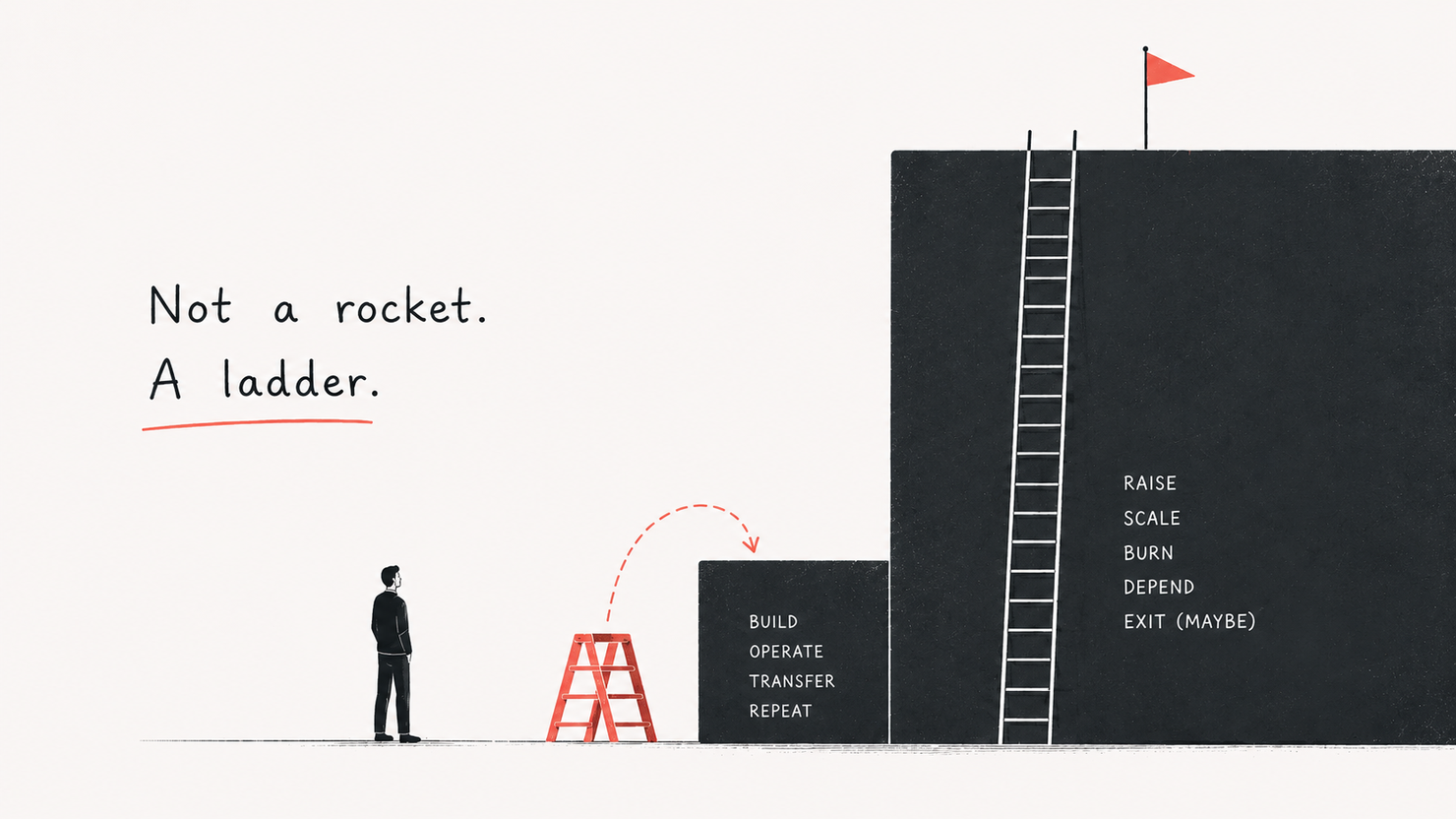
There are two exit stories that get told repeatedly. The first is the traditional one: raise capital, grow fast, exit via a strategic acquisition with a name everyone recognises. The second is the IndieHackers version: bootstrapped SaaS, sold for a tidy multiple, thread posted, number goes up. Both are real. Both have also been exaggerated – the indie exit story in particular got inflated during a period when multiples were high and everyone was posting their wins. Neither of them describes how most digital assets actually change hands.
Most people building digital assets are not optimising for a raise. They're optimising for independence – and an exit is how you bank it.
A lot of what changes hands isn't a profitable business in the traditional sense. It's a project someone built, a tool they shipped, a newsletter they grew, a domain they've held, an app they never quite finished monetising. These things have real value – they represent someone's time, skills, and creative effort. They're just not generating revenue yet, or not at a scale that makes them feel like a business worth selling. That's a perception problem, not a market problem.
The micro-liquidity range at Indiemaker: $1k to $500k – clean asset sales, no complicated deal structures.
Micro-liquidity is the infrastructure for this. The ability to exit a digital asset fully, in the $1k to $500k range, at any point in its life, without needing a broker or an investment bank. The transactions on Indiemaker aren't large by the standards of tech M&A. They're very meaningful to the person receiving them – and they free them up to build the next thing.
A SaaS product with $8k monthly recurring revenue. A content site generating passive affiliate income. A niche community with an engaged user base. A mobile app that never found its distribution. An AI tool built in a weekend that solves a specific problem. Each of these is a sellable asset. The market for them is real, active, and growing. What's been missing is the tooling, the trust infrastructure, and the community to make transactions happen cleanly.
The actual goal – for most people building independently – is autonomy. A clean exit at the right moment is the most direct path to it.
Build an asset, sell it when it makes sense, use the proceeds to fund the next one, repeat. Indiemaker is built to enable exactly this – a platform where assets are listed, priced, and transacted with the rigour the market deserves. Because if the infrastructure exists, the market grows. And if the market grows, more builders get access to outcomes that were previously invisible to them.
← Back to Notes